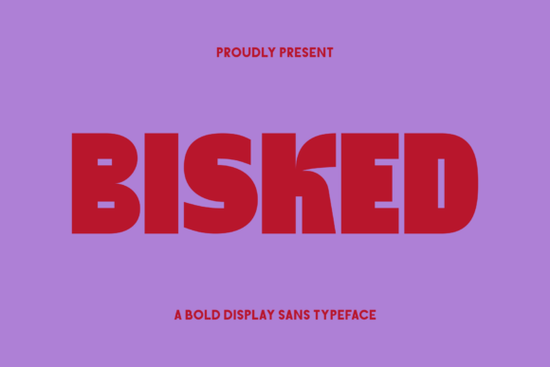
If you're looking for a bold, expressive sans serif font that stands out on posters, t-shirts, or social media banners without sacrificing readability Bisked Font is worth your attention. It’s not just another geometric sans. Its oversized proportions, warped curves, and asymmetrical cuts give it a hand-drawn energy while staying firmly legible at large sizes. Think of it as the kind of typeface that feels at home on a vintage concert poster and a modern streetwear drop playful but intentional, nostalgic but fresh.
What makes Bisked different from other display sans serifs?
Most bold display fonts lean either into strict geometry (like Helvetica-inspired options) or soft friendliness (like many rounded sans bundles). Bisked sits somewhere else entirely: it’s deliberately imperfect. Letters like “S”, “B”, and “R” have exaggerated bulges and off-kilter terminals. Some lowercase forms tilt slightly; uppercase letters feel stacked and weighty. Yet it remains highly functional especially for headlines, packaging, or apparel graphics where impact matters more than body text flow.
This isn’t just visual noise. The distortions are carefully balanced so they support rhythm and recognition not undermine them. You’ll notice subtle ligatures and alternates built in, plus full multilingual support (including Latin Extended-A), which helps if you’re designing for global audiences or multilingual branding projects.
Where does Bisked work best?
Because of its loud, youthful character, Bisked shines in contexts where personality matters more than neutrality:
- Print-on-demand designs think limited-run t-shirt graphics, tote bags, or enamel pins where bold lettering becomes the focal point
- Fashion and streetwear branding, especially for labels aiming for an irreverent, DIY-adjacent vibe
- Music-related visuals, like album covers or event posters inspired by psychedelic or post-punk aesthetics
- Editorial design magazine covers or section headers that need to cut through visual clutter
- Packaging for small-batch products, like craft sodas, indie perfumes, or ceramic studios wanting a tactile, handmade impression
It’s less suited for long paragraphs or minimalist corporate identities but that’s by design. If you’ve ever tried pairing a playful font with clean layouts and felt it clashed, Bisked works better when matched with raw textures, high-contrast photography, or uneven grids. Try it next to Pretzel for contrast in a multi-font layout, or alongside Balimo if you want complementary warmth without competing energy.
Technical details you’ll actually use
Bisked comes in OTF, TTF, WOFF, and WOFF2 formats so whether you’re embedding it in a Shopify store, using it in Adobe Illustrator, or prepping files for print, you’re covered. It includes both uppercase and lowercase glyphs, standard punctuation, numerals, and extended language support for Western and Central European languages. The alternate characters and ligatures aren’t hidden extras they’re practical tools. For example, swapping in a warped “A” or double-story “g” can add nuance without redesigning your whole layout.
You can preview and download Bisked Font directly from Creative Fabrica. It’s also compatible with most major design apps including Canva (via upload), Figma, Affinity Designer, and Procreate (with compatible font installers).
How to pair Bisked thoughtfully
Contrast is key. Since Bisked carries so much visual weight, it pairs well with simpler, neutral fonts for supporting text. A crisp, low-contrast sans like Grandeur gives balance without competing. Avoid stacking it with other experimental or heavily distressed fonts unless you’re intentionally going for maximalist chaos.
For color, try deep matte tones (charcoal, rust, forest green) or stark black-and-white combos. Neon accents can work but only if they reinforce the retro-futuristic mood rather than distract from the letterforms themselves.
Before you download or license Bisked Font, ask yourself:
- Is this for a headline, logo, or short phrase not body copy?
- Does my project benefit from a bold, expressive, slightly rebellious tone?
- Do I already have (or plan to use) a simpler secondary font for balance?
- Will I use the alternates or ligatures or am I okay with the default set?
- Am I designing for digital display, print, or physical products? (All formats are included, but confirm your workflow supports them.)
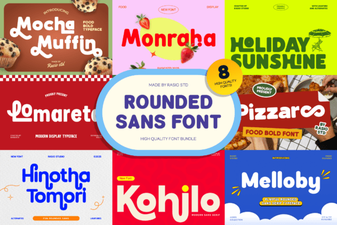 Rounded Sans Font Bundle for Modern Projects
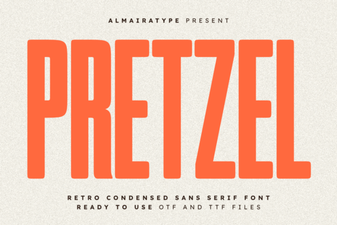 Pretzel Font Design Ideas & Download Guide
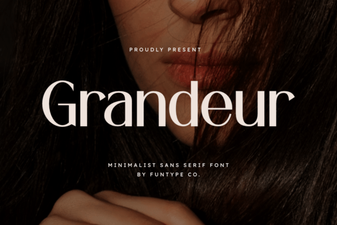 Grandeur Font: Elegant Designs & Creative Applications
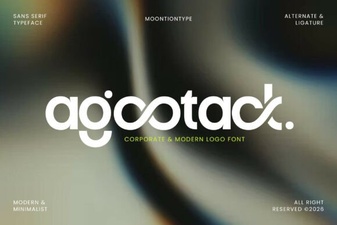 Agootack Font: Creative Projects and Uses
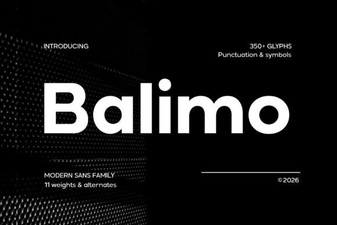 Balimo Font for Modern Web Design Projects
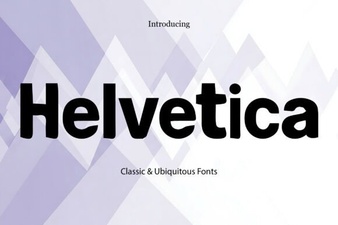 Helvetica Font: the Ultimate Designer's Toolkit